


I often talk in my classes about the importance of resistance training. But this doesn’t necessarily mean using a physical weight. Don’t get me wrong: dumbbells are awesome. But resistance bands can also be a powerhouse tool for building strength and bone density.
When I first started training years ago, I looked at these colourful strips of rubber and thought, “How hard can this be?” I quickly learned that they can be incredibly challenging! They offer a unique way to stimulate our muscles without the joint stress that sometimes comes with heavy iron.
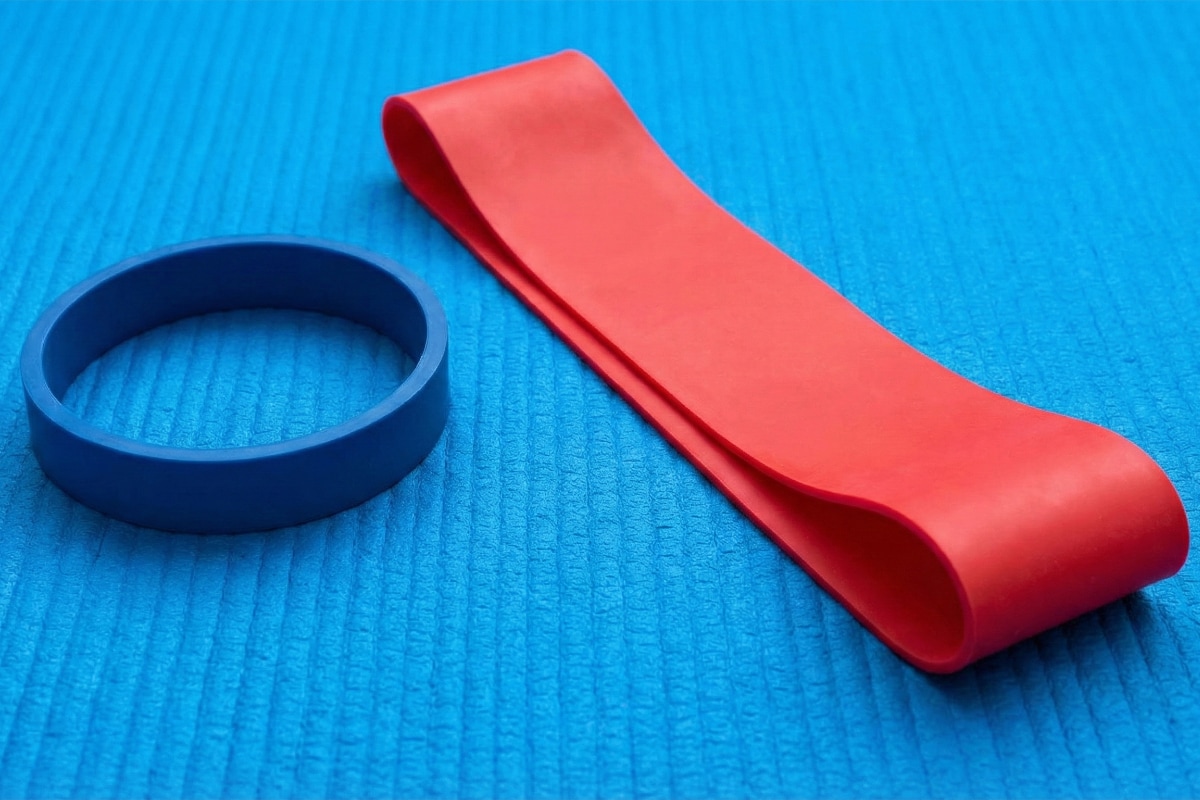
Know Your Bands: Loop vs. Long
Not all bands are created equal, and choosing the right one matters. Loop bands (the small circles) are fantastic for lower-body work. Placing them around your thighs or ankles activates the glutes and hips, which is crucial for pelvic stability. Long bands (either flat ribbons or tubes with handles) are generally better for upper-body movements like rows, bicep curls, and overhead presses. Having one of each gives you a full-body gym that fits in a drawer.

Focus on “Time Under Tension”
The magic of resistance bands lies in what’s known as variable resistance. Unlike a dumbbell, which stays the same weight, a band gets harder to pull the further you stretch it. This increases the tension at the peak of your movement, exactly where your muscles are often strongest. Research (1) has shown that training with elastic resistance provides similar strength gains to conventional weight training, making it an excellent option for maintaining muscle mass as we age.

Control the Return
It’s tempting to pull the band hard and then let it snap back quickly. Don’t do it! The “return” phase (eccentric movement) is just as important for building strength as the pull. Keep the movement slow and controlled in both directions. This control protects your joints and ensures you are working the muscle through the entire range of motion. Also, a quick safety note: always inspect your bands for tiny tears or white stress marks before use to avoid a snap during your workout!
Christie’s Recommendations
I highly recommend looking for a “variety pack” that includes light, medium, and heavy options so you can adjust the tension as you get stronger. Look for resistance bands that are 6 feet in length. Many standard bands are shorter, but that extra length makes a huge difference for overhead movements and general versatility. You can find these bands at many sporting goods stores or general online retailers like Amazon, but our fitness friend Zoe suggested this online retailer based in Vancouver (thanks Zoe!).
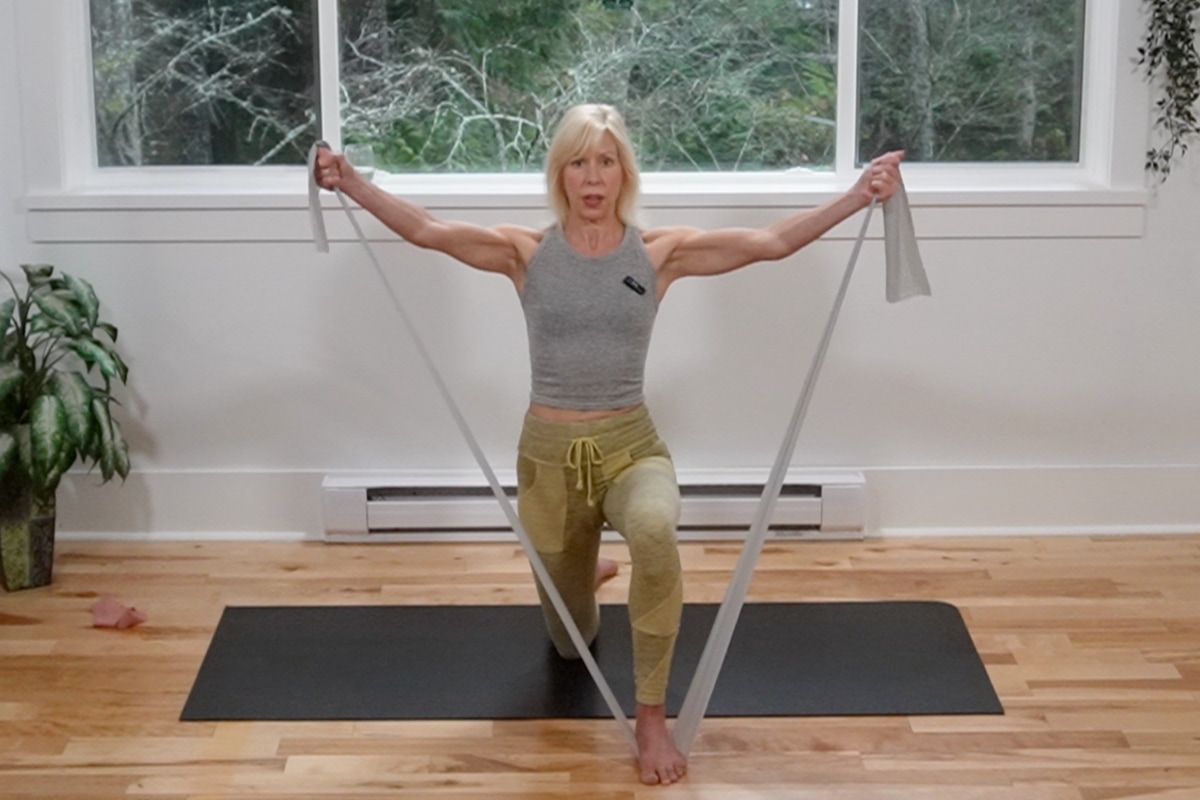
Embrace the Stretch
Resistance bands are proof that you don’t need a fancy gym or complicated cable machines to stay strong and fit. They offer a joint-friendly, highly effective way to challenge your muscles and support bone health.(2) Grab your band, check it for safety, and let’s get moving in our next session!
Want to know more about today’s topic? Do you have a suggestion for future posts? Leave a comment below – I’d love to hear from you!

- (1): Lopes, J. S. S., et al. (2019). “Effects of training with elastic resistance versus conventional resistance on muscular strength: A systematic review and meta-analysis.” SAGE Open Medicine.
- (2): Hong, A. R., & Kim, S. W. (2018). “Effects of Resistance Exercise on Bone Health.” Endocrinology and Metabolism.
0 Comments