

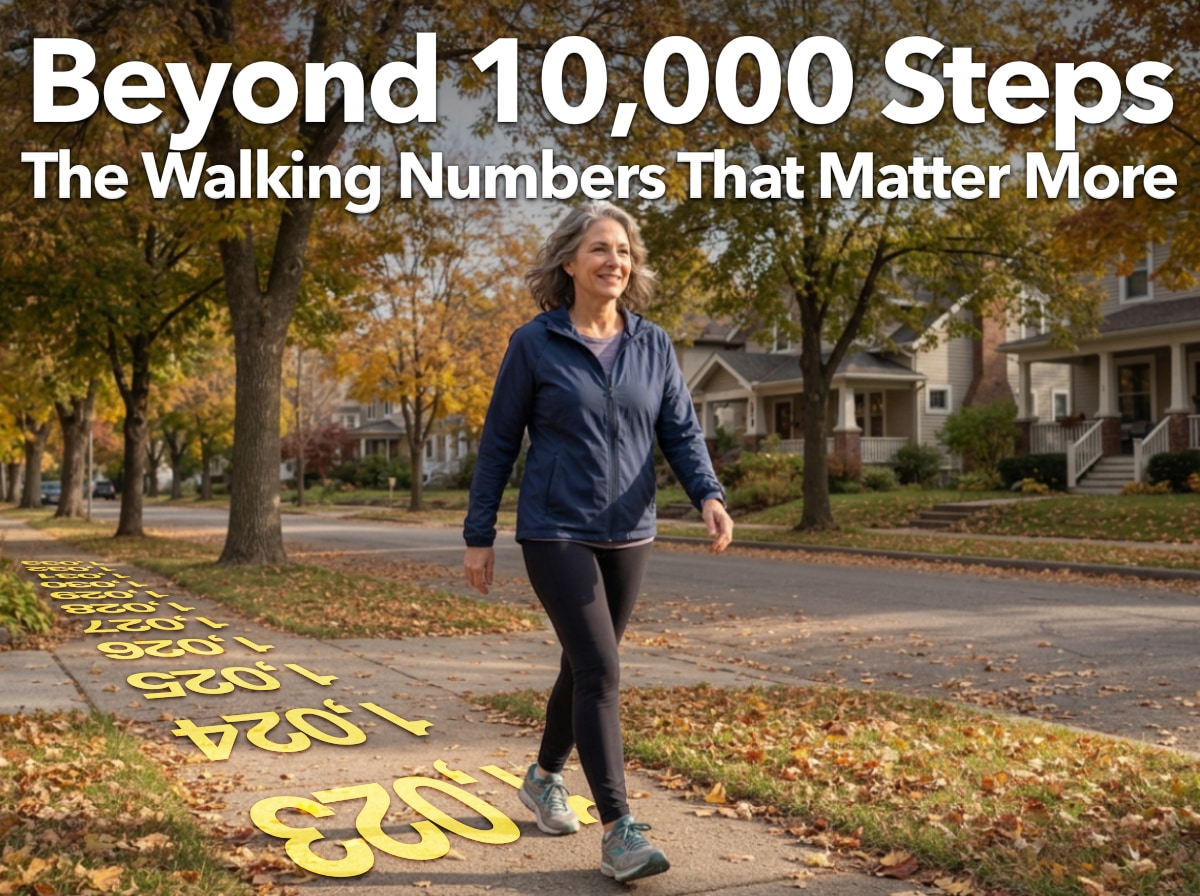
You’ve probably heard how everyone should take 10,000 steps daily. But why 10,000? Turns out there’s nothing scientific about that number; it’s based on the name of a Japanese pedometer. The Manpo-Meter was first sold in 1965. The name means 10,000-step meter and that number stuck.

So what is the ideal number of daily steps? According to a recent research review, the health benefits of daily steps start to level off at around 5,000 to 7,000. Once you’re in that zone, how you walk tells you more than how far you go. Here are four numbers worth paying attention to.
How Fast Do You Walk?
Health researchers often refer to a person’s walking speed as an actual vital sign, right up there with temperature, heart rate, breathing rate and blood pressure. A study published just last month found people who walk faster had a lower risk of dying from any cause, even after accounting for how many steps they took.
✅ TIP: Pick up the pace! Next time you’re out for a walk, try adding a few brisk minutes.
Asymmetry: Is One Leg Doing More?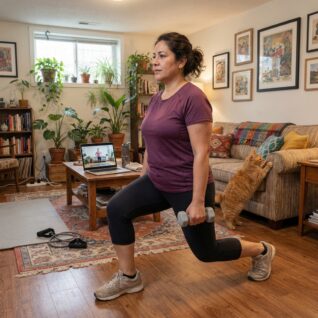
Walking Asymmetry measures whether one leg is quietly doing more of the work. It’s often a gentle limp you’d never notice, and if you carry an iPhone, the Health app tracks it under Mobility. It often comes down to one leg being stronger than the other.
✅ TIP: Single-leg exercises like those we often do in BodySculpt help strengthen the musculature of the entire leg.
Double Support Time: Both Feet Down
When we walk we spend a certain amount of time balancing on a single foot: first left, then right, then left again. Double Support Time is the amount of every step when both feet are on the ground. That number can creep up as we get older, and it rises higher in people who feel unsteady and “shuffle” as they walk. Researchers have linked longer double support time to falls. This is also tracked by your iPhone, if you have one.
✅ TIP: Strong calves and ankles help you push off with confidence, so try some calf raises at the counter while the kettle boils.
Balance: The 10-second Test
Can you stand on one leg for 10 seconds? In a study of 1,700 adults aged 51 to 75, those who couldn’t had an 84% higher risk of death over about seven years. But only 16% of older Canadians get the recommended balance activity.
✅ TIP: Practise while you brush your teeth, and practice along with me in our classes.
Walk Smarter, Not Just Longer
Your step count still matters, but it’s only part of the story. Walk a little faster, keep both legs strong, push off with confidence and practise your balance. Your future self will thank you!
For More Information
-
Haddadj R, et al. Clinical Walking Speed, Free-Living Walking Cadence, and All-Cause Mortality. JAMA Network Open, 2026: Link
-
Ding D, et al. Daily steps and health outcomes in adults. Lancet Public Health, 2025: Link
-
Apple. Measuring Walking Quality Through iPhone Mobility Metrics: Link
-
LaRoche DP, et al. Strength Asymmetry Increases Gait Asymmetry and Variability in Older Women: Link
-
Validity and reliability of the Apple Health app for measuring gait parameters: Link
-
Araujo CG, et al. Successful 10-second one-legged stance performance predicts survival. British Journal of Sports Medicine, 2022: Link
-
Public Health Agency of Canada. Strength training and balance activities in Canada: Link

0 Comments