
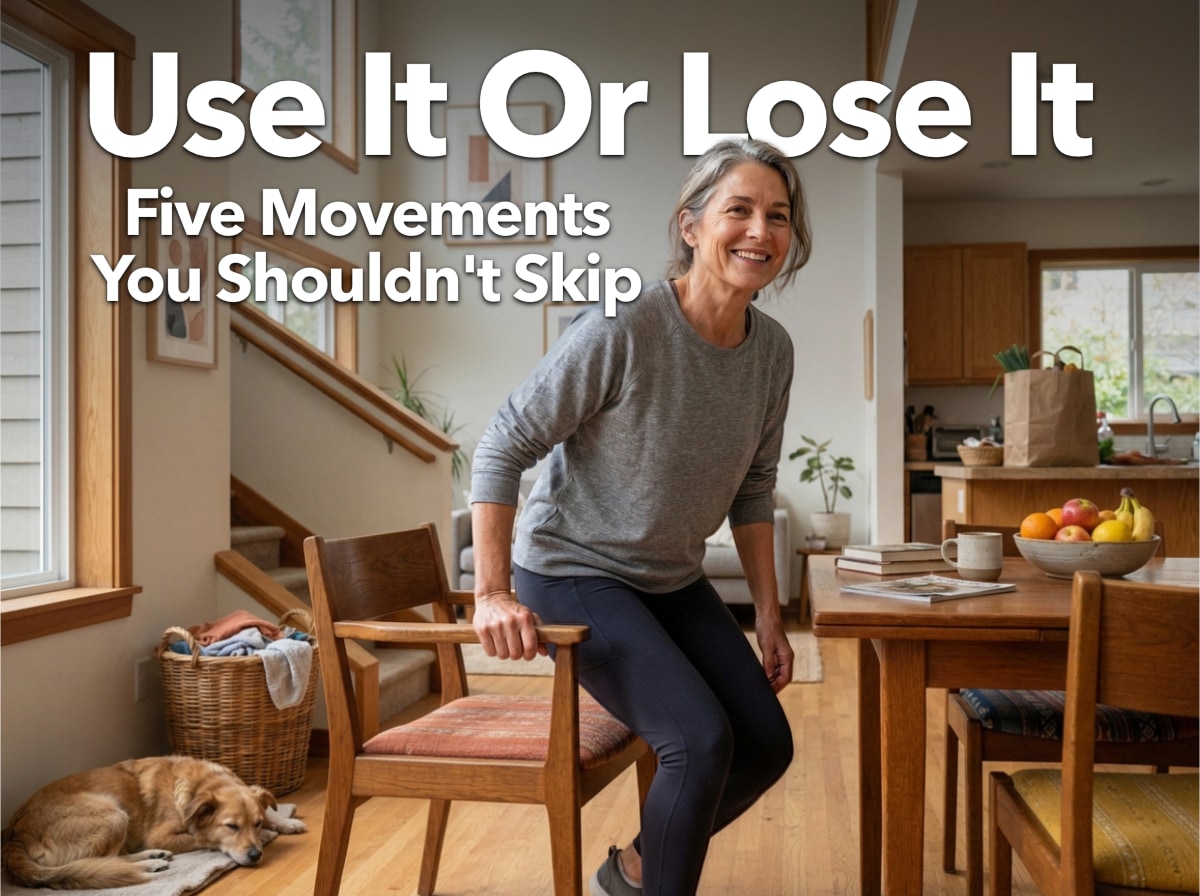
In our BodySculpt classes we focus a lot on resistance training, but here’s a question: what are we actually training for?
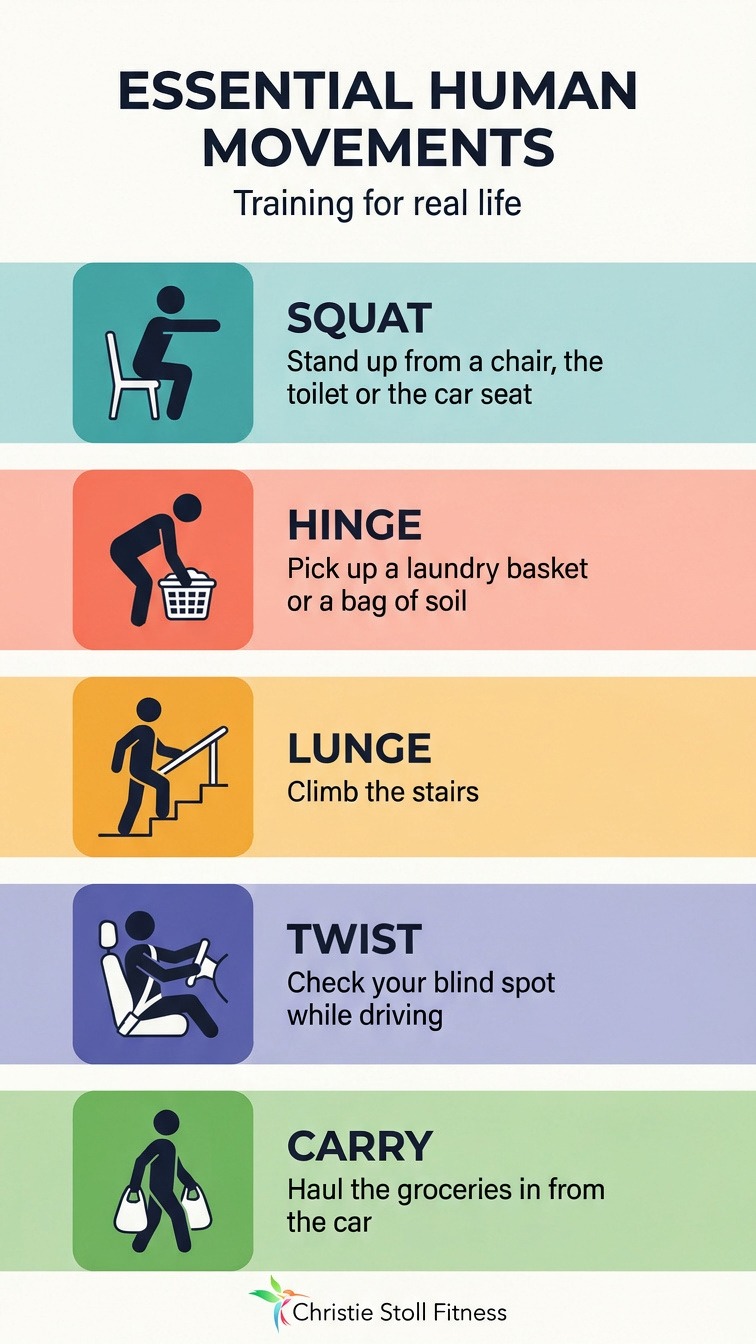
We’re not lifting weights simply for the sake of lifting weights. We’re training for real life. Squats are training for getting up off the couch. Deadlifts are about picking up the laundry basket without your back complaining. Every move we practise lines up with something you do every single day; they are essential human movements.
This next part is important: some of these moves can feel uncomfortable, and it’s tempting to quietly drop the ones that grumble. Please don’t! These are the moves that keep us independent. If you skip one, you’ll gradually lose that ability.
So let’s talk about why you need to keep moving, and how to tell discomfort (your muscles working) from pain (a signal to stop).
1. The Squat: Up Off the Couch
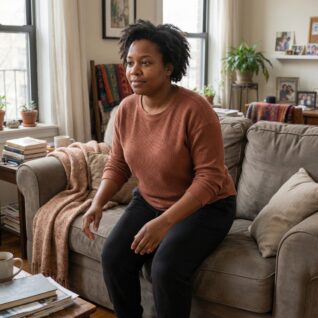 If you skip squats because of your knees, this one’s for you. Think about how many times a day you go from sitting to standing: the couch, the toilet, the car. Every one of those is a squat. If you avoid squats in class and those muscles gradually weaken, getting up becomes harder, so you avoid it even more. That’s a loop you want to stay out of.
So instead of dropping the squat; modify! Go shallower, tap a chair behind you, or rest a hand on the counter. Yes, your knees might grumble a bit; that’s to be expected. Sharp pain is your cue to ease off and get it checked.
2. The Hinge: Picking Things Up
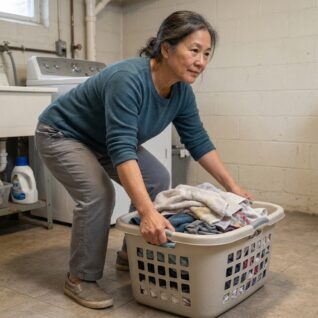 Bending down to pick something up is a deadlift in disguise. A laundry basket, a bag of soil, a heavy pot from the bottom cupboard: hips back, back long, and let your legs and glutes do the work. When we practise deadlifts in BodySculpt, we’re teaching your body to lift safely so your back isn’t left doing the job alone. If you avoid working those big muscles, your back will end up covering for them, and throwing your back out is no fun at all. So again, modify. If something feels tight, lighten the load and let your body, not your ego, set the weight.
3. The Step: Climbing Stairs
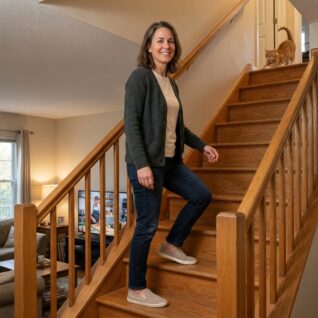 Stairs are a step-up on repeat: with each step you’re asking one leg to lift your whole body while the other swings through. Lunges and other single leg work in BodySculpt and Pilates build exactly that single-leg strength and balance. Leg strength is also what keeps us steady, so weak legs aren’t just an inconvenience, they’re a fall risk. If you feel burning in your thighs halfway up, that’s your muscles working – not a warning. A sharp pain in the knee is different; more on that in a moment.
4. The Twist: Your Shoulder Check
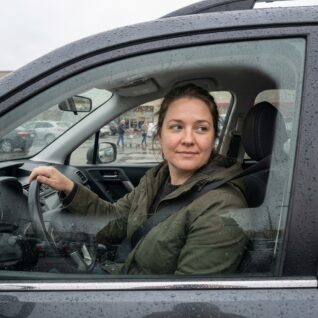 Another essential human movement is twisting. Every time you check your blind spot while driving, you’re twisting through your neck and upper back. We do it so often we don’t notice – until things get stiff and it suddenly takes real effort. If rotation in your upper and mid back is limited, blind spots are harder to check, and that makes this a safety skill, not just a flexibility one. Our Mobility classes are great for keeping that turn available, and the gentle twists in Pilates help too. A little stiffness as you turn is normal; a sharp pinch isn’t.
5. The Carry: Hauling Groceries
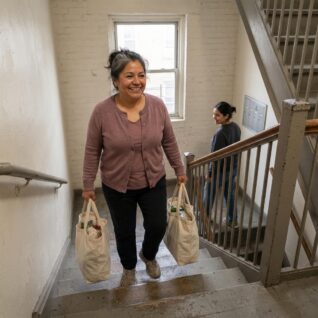 Groceries, a full watering can, a suitcase: carrying is one of the most useful things our bodies do. It works your grip, your core and your legs all at once. The weighted lunges and biceps curls we do in BodySculpt train you to carry heavy items in your daily life – a skill you need to hold on to as you get older. Skip these moves and you’ll gradually become less able to lift that load. Your forearms might burn and your grip might shout a little; that’s discomfort doing its job.
Discomfort Versus Pain
Here’s the deal: avoiding a movement doesn’t protect you. Arthritis Society Canada points out that the muscles protecting our joints weaken when we move less, which leaves those joints more vulnerable.
So how do we tell the difference? Discomfort is a burn, a wobble, a bit of stiffness: your body doing the work you’ve asked of it. The Arthritis Foundation suggests it should sit around a 2 out of 10. If joint soreness hangs around for two hours after you finish, ease off a little next time. Pain is different. If it’s sharp or strong, stop that movement and check in with your doctor or physiotherapist. Then adjust the depth, the load or the range, but keep these essential human movements in your life.
Active people like you have already done the hard part by showing up, and your future self, carrying the groceries up the stairs without a second thought, will thank you!
For More Information
- Harvard Health Publishing, “Three moves for functional fitness”: Link
- Harvard Health Publishing, “Building stronger legs”: Link
- MSD Manual, “Functional Assessment of the Older Driver”: Link
- Arthritis Society Canada, “Starting Fitness”: Link
- Arthritis Society Canada, “Physical Activity Guide”: Link
- Arthritis Foundation, “Staying Fit with Arthritis”: Link
0 Comments