

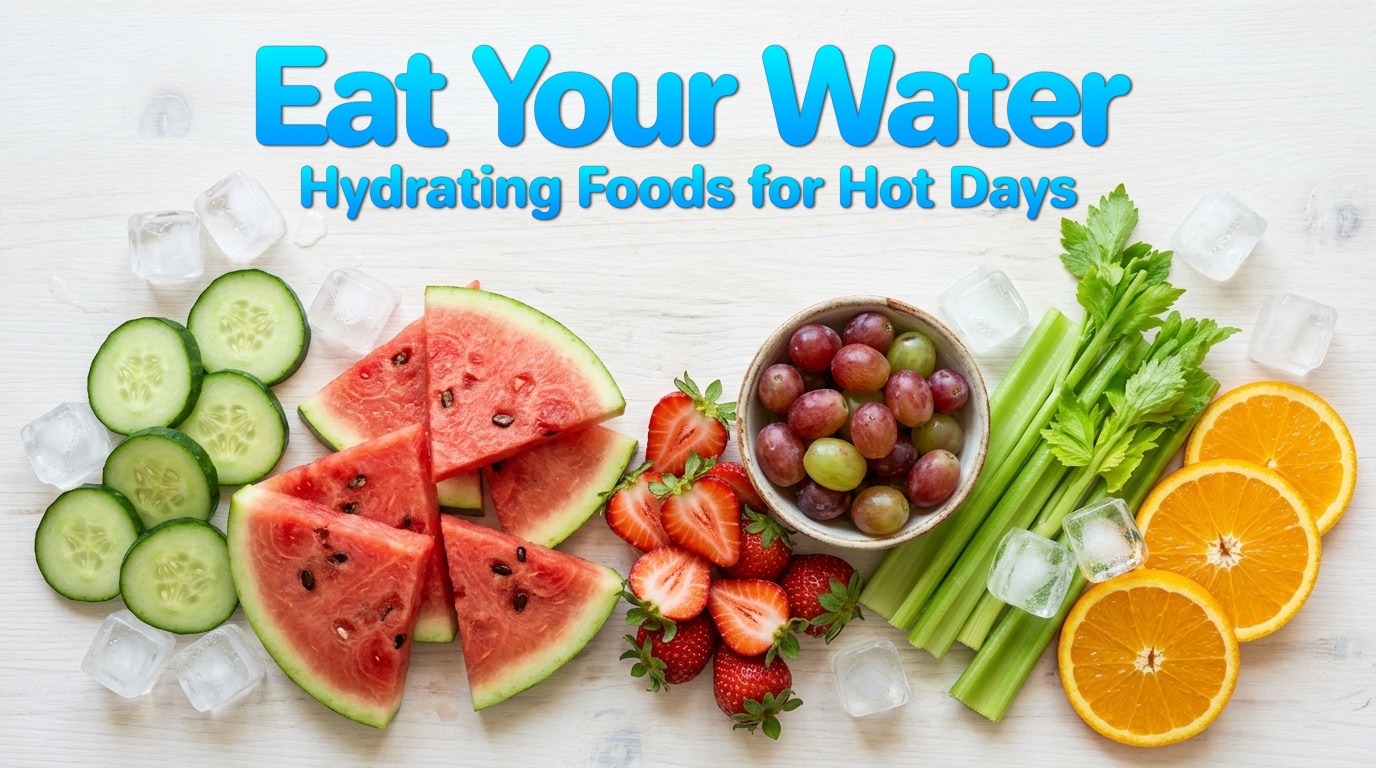
When you work out on a hot day, you might feel more wiped out than usual. Sometimes that’s not fatigue; it’s dehydration creeping up quietly. And the answer isn’t always just to reach for your water bottle.
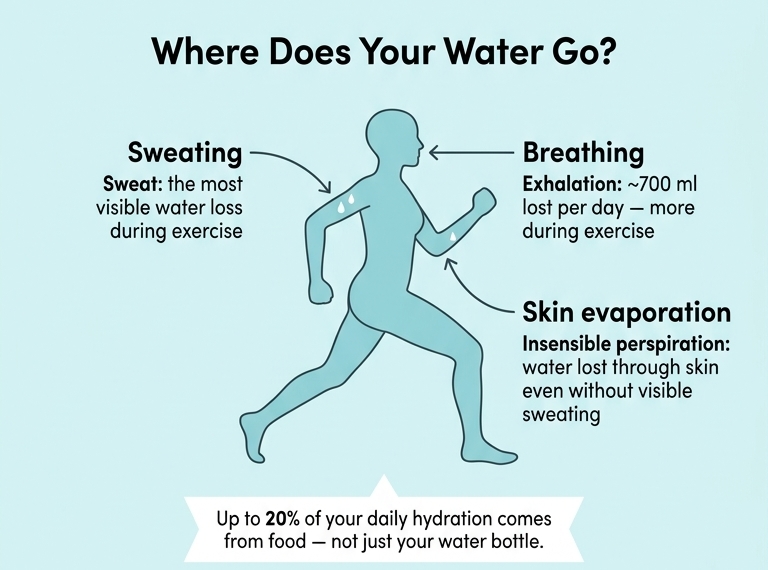
We grew up hearing “drink eight glasses of water a day.” Turns out, that’s a bit of an oversimplification. According to the Institute of Medicine, roughly 20% of our daily water intake actually comes from the food we eat, not just what we drink.
There’s another piece of this puzzle that surprises a lot of people: we lose water not only through sweat, but also simply by breathing. Every time you exhale, you breathe out water vapour. Research suggests we lose somewhere around 700 ml of water per day through respiration alone, and that number goes up significantly when we’re exercising and breathing harder. So active people are losing water from multiple directions at once, which means staying ahead of it really matters.
Tip 1: Load Up on the Heavy Hitters
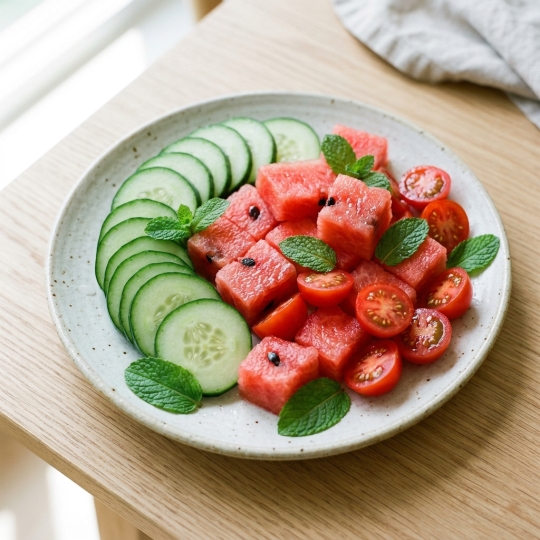
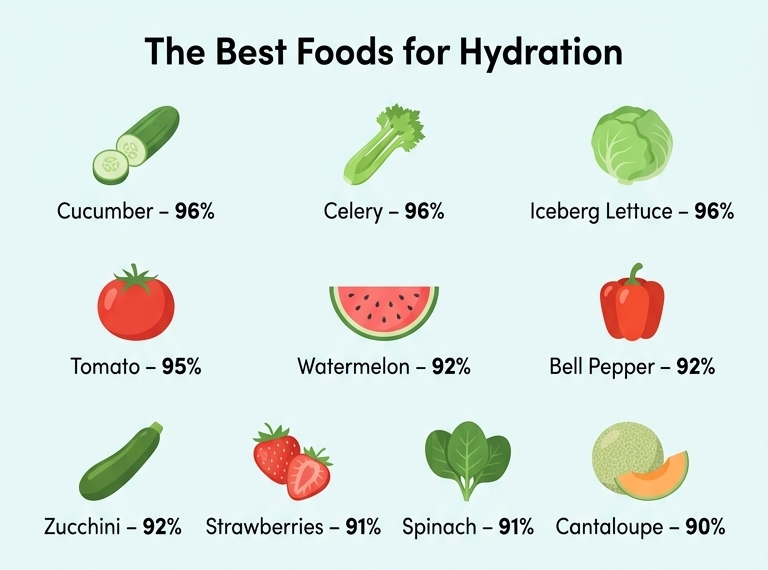
When it comes to water content, some foods are in a league of their own. Cucumber tops the list at around 96% water; not far behind are iceberg and romaine lettuce, celery, and tomatoes. Watermelon lives up to its name with over 90% water content, and it happens to be one of the most refreshing things you can eat after a summer workout. Strawberries, zucchini, and bell peppers round out this VIP list nicely.
The beauty of these foods is that they deliver hydration along with vitamins, fibre, and antioxidants; things a glass of water simply can’t offer. Think of them as water with bonuses.
Tip 2: Time It Around Your Workouts

For those of you joining me for higher intensity classes like BodySculpt, the timing of hydrating foods actually matters. A 2009 University of Aberdeen study found that consuming watermelon or cucumber after exercise was twice as effective at rehydrating the body compared to plain water alone, thanks to the combination of water, natural sugars, and mineral salts. So consider keeping a little container of sliced watermelon, cucumber, or strawberries nearby for your post-class snack. It’s one of those situations where the most delicious option also happens to be the smartest one.
Tip 3: Sip, Spoon, and Blend Your Way There
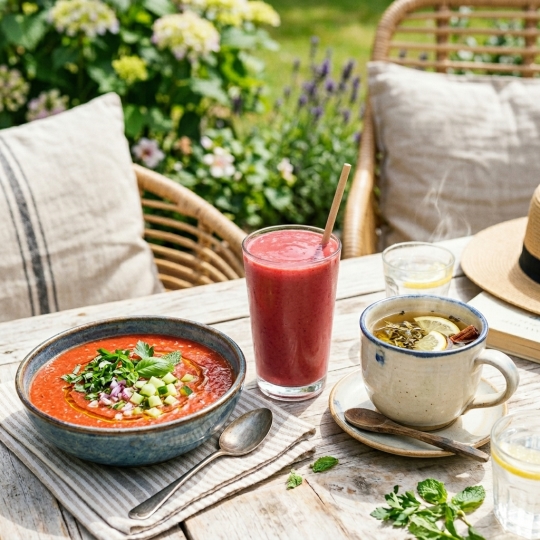
Hydration doesn’t only happen in salads. A light broth-based soup or a chilled gazpacho delivers both fluids and a gentle hit of minerals at the same time. A well-built smoothie (think spinach or kale blended with strawberries, banana, and a splash of coconut water) is another wonderfully efficient way to combine high-water fruits with electrolyte-rich ingredients in a single glass. Even a cup of herbal tea counts toward your daily intake. The point is that liquids don’t have to be plain water to do the job; variety is genuinely your friend here, especially as we get older and our thirst sensation can become a less reliable signal that our body needs fluids.
Tip 4: Build a “Water Plate” Habit
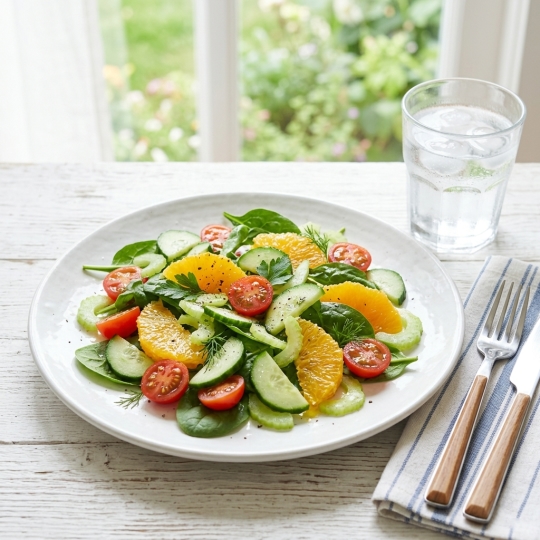
One of the easiest habits I’ve adopted is mentally scanning my meals for hydrating foods; what I think of as building a “water plate.” Ask yourself: does this meal have a high-water vegetable or fruit? A bit of cucumber on the side, tomatoes in the salad, some berries with breakfast? It doesn’t have to be elaborate. Even adding celery sticks or a handful of grapes as a snack bumps up your hydration meaningfully over the course of a day. Small choices, consistently made, add up quickly.
Tip 5: Electrolytes Matter — But Context Is Everything

Electrolytes are genuinely important — but not necessarily in the way the sports drink industry would have you believe. Electrolytes are minerals (mainly sodium, potassium, and magnesium) that help your body absorb and hold onto fluids at the cellular level. For most of our fitness friends, your regular diet does the job just fine. Where electrolyte replacement really becomes important is during prolonged, intense exercise in the heat (think a long run, a half marathon, or back-to-back outdoor sessions lasting well over an hour). In those situations, significant sweat loss depletes these minerals faster than food alone can replace them, and that’s when targeted electrolyte support makes sense. For everyday activity, though, the best approach is simply to eat a variety of whole foods rich in potassium and magnesium — bananas, avocados, spinach, and coconut water are all excellent choices — and let your body do the rest.
Keep It Cool All Summer
Staying well hydrated when it’s hot out is truly one of the best things you can do for your energy, your performance in our workouts, and how you feel in general. The “eight glasses of water” rule isn’t wrong; it’s just incomplete. Your food is a powerful and often overlooked tool in your hydration toolkit. Focus on high-water fruits and vegetables, blend up a smoothie, remember that every breath you take is losing a little moisture, and time those hydrating snacks around your workouts. If you want more guidance on fuelling your body well, my Nutrition Coaching programme is always available. Eat well, move well, and stay cool out there!
For More Information
Institute of Medicine / Ohio State Health: Food’s contribution to daily water intake.https://health.osu.edu/wellness/exercise-and-nutrition/daily-water-intake
PMC / National Institutes of Health: Respiratory water loss (~700 ml/day).https://pmc.ncbi.nlm.nih.gov/articles/PMC3357553/
PubMed: Water loss through breathing during exercise. https://pubmed.ncbi.nlm.nih.gov/22714078/
GoodRx: Hydrating fruits and vegetables with high water content. https://www.goodrx.com/well-being/diet-nutrition/fruits-and-vegetables-that-hydrate-you
American Heart Association: Electrolytes, hydrating foods, and summer produce.https://www.heart.org/en/news/2024/06/19/electrolytes-can-give-the-body-a-charge-but-try-not-to-overdo-it
Harvard T.H. Chan School of Public Health, The Nutrition Source: Electrolyte drinks.https://nutritionsource.hsph.harvard.edu/electrolyte-drinks/

These newsletters are always so full of helpful tips! And it’s a perfect time of year to focus on fruits and vegetables. Thank you for this and for everything!