

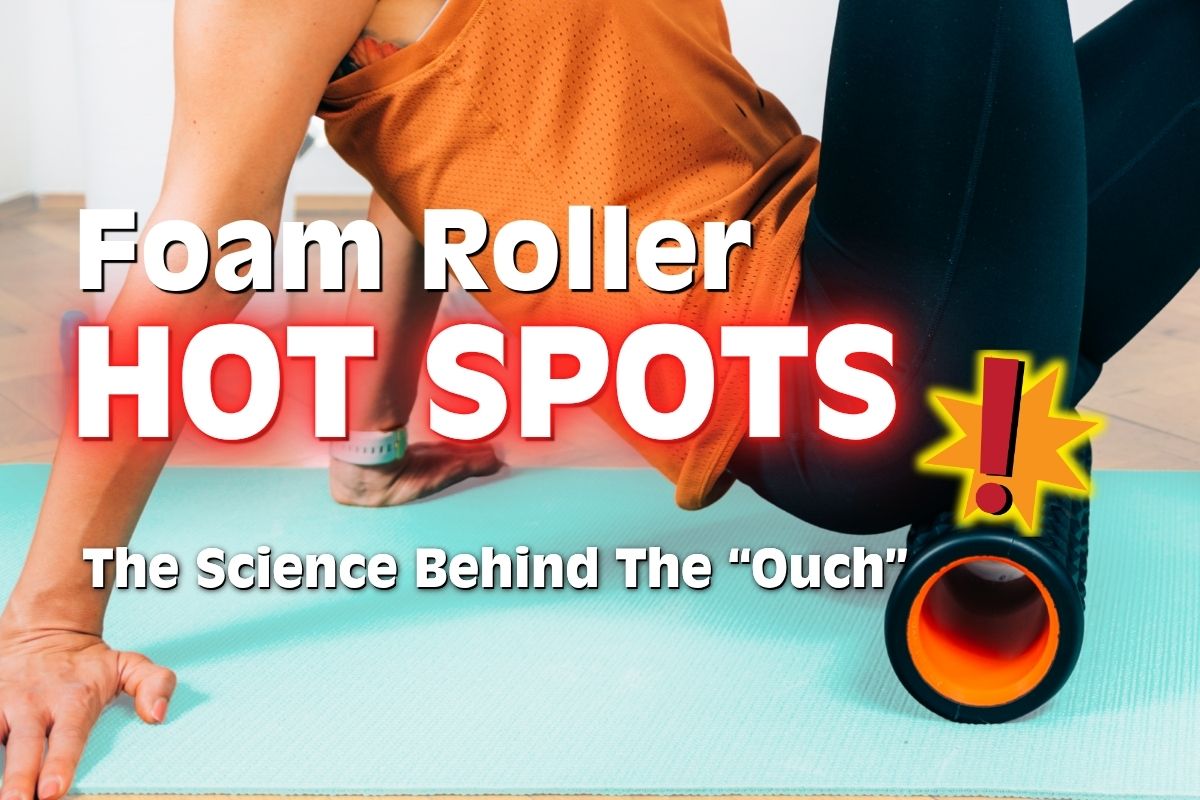
You’ve probably felt this; I know I have. You’re using your foam roller, maybe on your glutes or quads, and: OUCH! You hit a really tender area that takes your breath away.
I call these “hot spots.” But what exactly are they and why do we experience them?
Think of hot spots (also called myofascial trigger points) as a specific signal your body is sending you. These tight, hypersensitive little spots are extremely common in active people. What’s more, we tend to accumulate them more readily as we age, since recovery takes longer and fascia loses a bit of its elasticity.
The good news? You can do something about them, right there on your living room floor.
Understand What You’re Actually Rolling

A hot spot is a small, localised contraction within a bundle of muscle fibres. Those fibres get stuck in a contracted state and don’t fully release, even when you’re resting. The surrounding fascia — the thin connective tissue wrapping around your muscles — also gets involved, which is why the full term is *myofascial* trigger point.¹
Because those contracted fibres compress tiny local blood vessels, oxygen delivery drops and metabolic waste builds up, creating that characteristic sharp, achy sensitivity when you press on it.² Think of it as a micro traffic jam in your muscle tissue.
There are two types worth knowing about: active trigger points, which can hurt even without direct pressure and sometimes cause referred pain in another part of your body entirely; and latent trigger points, which only hurt when pressed but can quietly limit your range of motion.¹
Foam rolling targets both.
Slow Down — Way Down

Here’s the mistake I see most often: rolling too fast. When you roll quickly over a tight area, you’re basically just gliding past the problem. The tissue doesn’t have time to respond.
The most effective approach is to roll slowly until you find a tender spot, then stop and hold sustained pressure right there. According to NASM’s foam rolling guidelines, you should hold on the tender spot for 30 to 90 seconds, allowing the targeted area to relax and the discomfort to reduce. Breathe slowly and deliberately — this helps override your body’s reflexive urge to tense up against the pressure. You should feel the intensity gradually decrease as the tissue releases. If it’s not easing up at all after 90 seconds, it may be worth a visit to a physio.³
Don’t Mistake “Ouch” for “More Is Better”

There’s a big difference between productive discomfort and actual pain. Foam rolling a trigger point should feel like that classic “hurts so good” sensation — uncomfortable but manageable, something you can breathe through. A useful rule of thumb: hold on the tender spot until the tenderness has reduced by approximately 50 to 75 percent.
If the pain is sharp, shooting, or getting worse rather than better within the first 30 to 60 seconds, back off. Rolling should not be performed over any area with recent trauma or injury such as bruising, and pressure should never be applied directly to bony areas — stay on the soft tissue. Also avoid rolling directly on joints. The goal is to help your muscles recover, not to punish them.
Pair Rolling With Mobility for Better Results

Foam rolling and mobility are genuinely better together. Research suggests that for warm-up purposes, foam rolling appears to be an effective tool for increasing flexibility, with the optimal dosage being a total of 90 to 120 seconds of rolling per muscle group. The window of improved mobility after rolling is real, but it doesn’t last forever — so roll first, then move into your dynamic warm-up while the tissue is more receptive.
Think of rolling as unlocking the door; mobility is walking through it. If you only ever roll without following up with movement, you’re leaving some of the benefit on the table.
Be Consistent, Not Intense
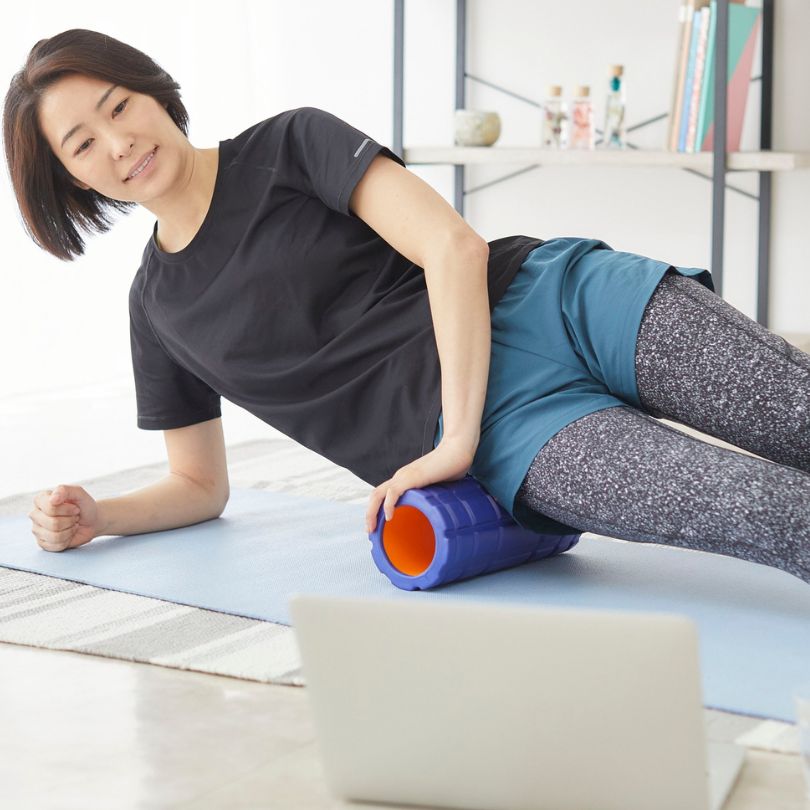
One long, aggressive foam rolling session won’t undo months of accumulated tension, and going too hard can actually leave the area feeling bruised. Research published in the *Journal of Athletic Training* found that foam rolling effectively reduced delayed-onset muscle soreness (DOMS) and associated decrements in dynamic performance measures, but the key is regular, moderate application rather than infrequent and intense sessions.
Even 5 to 10 minutes of targeted rolling a few times per week makes a meaningful difference over time. I keep my roller near the couch and often spend a few minutes on it in the evening before bed. It doesn’t need to be a big production; it just needs to happen consistently.
Roll Smart, Feel Better
Hot spots aren’t something to dread; they’re actually useful feedback. Now that you know a trigger point is a small patch of muscle fibres stuck in contraction, it makes sense why rolling slowly and holding with sustained pressure works so much better than just quickly running the roller back and forth. Find the spot, breathe through it, hold for up to 90 seconds, follow up with a stretch or mobility, and do it regularly. That’s really the whole recipe. Over time, you may find those angry spots become fewer and less intense, and your muscles will thank you.
For more information:
¹ Mt. Shasta Bodywork. *Knots vs. Trigger Points.*
² Hutchinson, A. *What are muscle knots?* The Conversation, 2022.
³ Tri-City Medical Center. *Foam Rolling: Getting Out the Knots.*

0 Comments