

It’s a common phenomenon you might even notice in yourself: you’re tackling a new complicated move in BodySculpt, or holding a tricky balance pose, and your face becomes a study in concentration. Maybe you furrow your brow, or bite your lip, or even stick out your tongue as you try to get those limbs to cooperate.
That sensation is not just your muscles working; it’s your brain literally re-wiring itself.
We often hear how “brain games” like crossword puzzles or sudoku can keep our minds sharp as we age. But the most effective medicine for a vibrant mind is often found through movement.
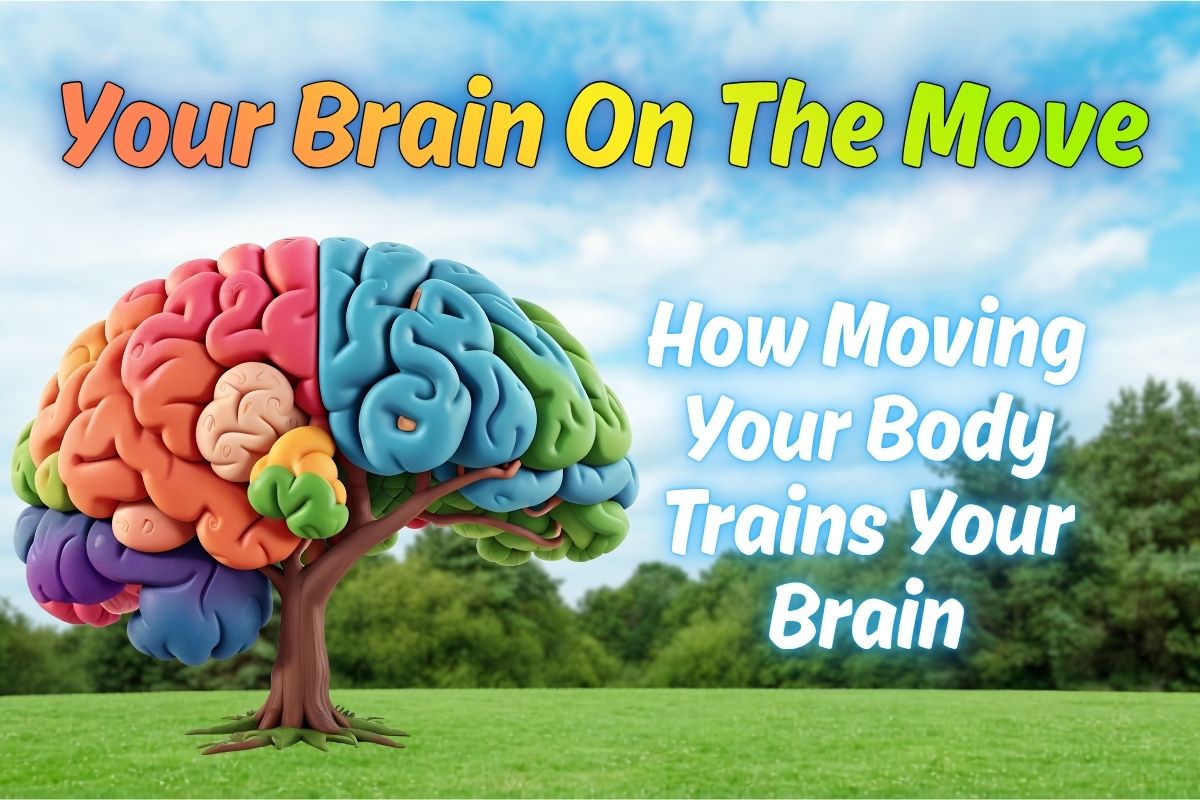
When we challenge ourselves with new or complex patterns, we tap into neuroplasticity. This is the incredible ability of our nervous system to form new neural connections, essentially giving our brains a fresh coat of paint while tuning up the engine.
Challenge Your Coordination

Every time we perform a move that requires opposite arm and leg movements, we’re engaging in a “cross-body” drill. These exercises force the left and right hemispheres of your brain to communicate across the corpus callosum.
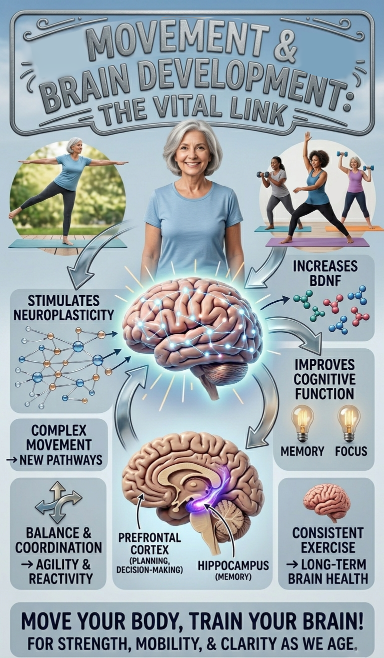
Research shows physical activity increases the production of Brain-Derived Neurotrophic Factor (BDNF), a protein that supports the survival of existing neurons and encourages the growth of new ones.
Think of it as “Miracle-Gro” for your grey matter!
Embrace the Learning Curve
When a move does not click right away, there’s a tendency to feel a bit clumsy. But that internal struggle is exactly where the growth happens.
When you perform a movement that’s already second nature, your brain is essentially on autopilot. But when you tackle a complex compound move, like a squat combined with an overhead press and a heel lift, your brain needs to work overtime to map that sequence. This cognitive demand is what builds those new pathways, transforming your workout into a genuine brain game.
Focus on Mindful Precision

In our Pilates and BodySculpt classes, the focus on where your body is in space is a skill called proprioception. Refining this sense requires deep concentration and a strong “mind-muscle” connection.
Focusing on these small, precise adjustments helps maintain the integrity of the neural maps in your motor cortex. Staying sharp and coordinated in our workouts helps us move with confidence in the real world – whether we’re navigating a rocky trail or simply avoiding tripping on a loose rug.
Moving Forward Together
The beauty of movement is that it serves many purposes at once. Yes, we’re building strength and maintaining our mobility. But we’re also making sure our brains stay as resilient and adaptable as possible.
Physical exercise has been shown to improve executive function and memory in older adults, proving that the time you spend doing classes is a direct investment in your future clarity.
So the next time a sequence feels a bit “brain-bending,” embrace the challenge. You’re not just exercising; you are evolving!
For more information, check out these studies
Harvard Health Publishing: Exercise can boost your memory and thinking skills.
Mayo Clinic: Exercise and Stress: Get moving to manage stress.

0 Comments