

It’s easy to think that if a muscle feels tight, the solution is to stretch until it lets go. For a lot of people, a quick stretch is the “go-to” move for any kind of stiffness.
But there’s a fundamental difference between passive flexibility and true Mobility.
Think of stretching like pulling on a stuck door handle; you might get a bit of give, but you aren’t actually greasing the hinges.
Mobility is that grease: it’s the strength and control required to move your joints through their full range of motion.
I’m delighted to see more and more fitness friends joining my three live Mobility sessions each week; it’s great to see this shift in focus. Whether you join me live or dive into the dozens of sessions in our video library, your body will certainly feel the difference when you move “beyond the stretch.”
The “Locked Long” Muscle Myth

Often a muscle will feel tight not because it’s short, but because it’s being pulled taut like a bridge cable.
For example, when we sit for long periods our hip flexors stay in a shortened, contracted state. This causes the glutes to remain in a perpetually lengthened, or “inhibited,” position. Stretching those “tight” glutes might feel good in the moment, but it can actually aggravate the imbalance because the muscle is already overstretched.
Real progress comes from waking up the glutes and releasing the front of the hip, which is exactly why we focus on those specific movement patterns in my Mobility classes.
Mobility Requires Strength
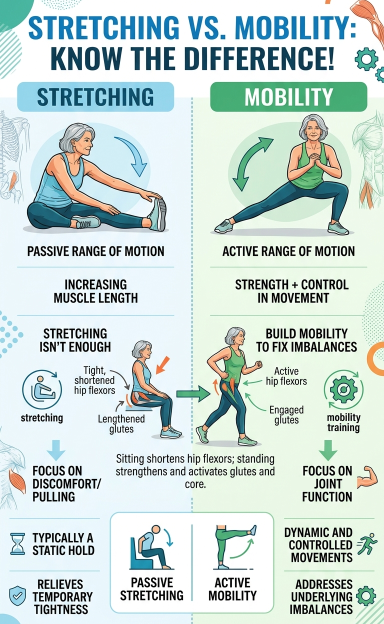
Mobility is essentially “active range of motion.” It requires your nervous system to be able to control a joint as it moves.
Stretching is passive; you’re using gravity to push a muscle into a position. If you lack the strength to support your joints at the end of their range, your body will “tighten up” as a protective mechanism to prevent injury.
By building strength within the movement (something we work on in every session) you tell your brain that it’s safe to let go of that protective tension.
Address the Kinetic Chain
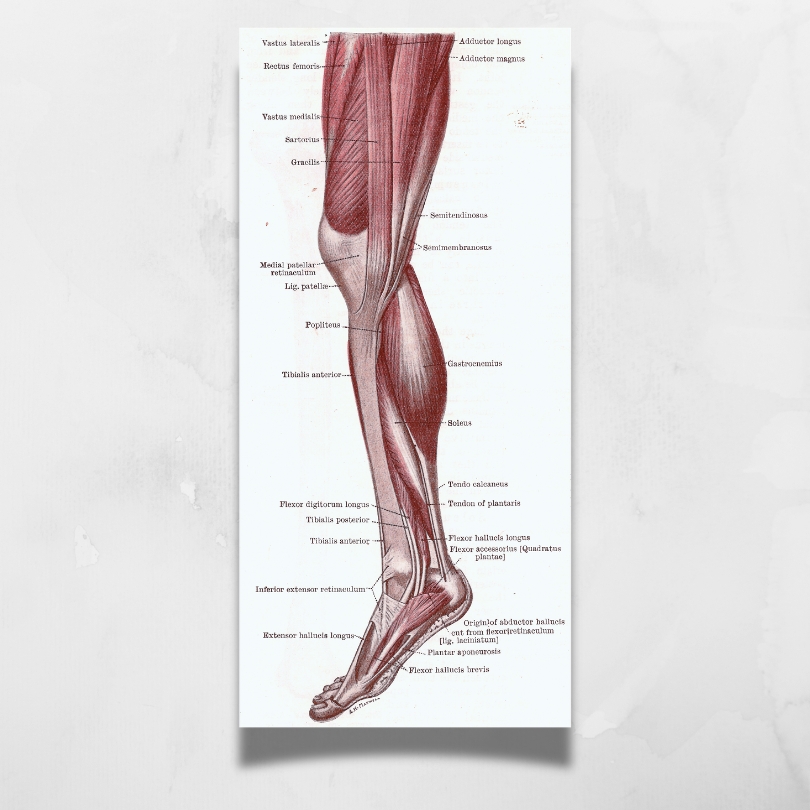
Our bodies are master compensators. If your ankles are stiff, your knees or lower back will often try to do the extra labour for them. This creates a ripple effect of “tightness” that a simple stretch cannot fix.
Mobility training looks at the whole picture. By improving the function of a specific joint, like the ankle or the mid-back, you often find that the “tightness” in your neck or hips magically disappears because the rest of the chain is finally doing its fair share of the work.
Consistency Over Intensity

You don’t need to be a contortionist to be mobile. In fact, aggressive stretching can lead to micro-tears or joint instability.
Research suggests that short, frequent bouts of active movement are far more effective for long-term functional health than one long, intense stretching session a week.
This is why I encourage you to join me for a Mobility class whenever you can; it provides that consistent “maintenance” that prevents imbalances from becoming “baked in” to your posture.
Moving With Purpose
The goal is not just to be flexible, but to be functional. While a relaxing stretch has its place in a wind-down routine, Mobility is what allows us to garden, hike, and play with grandchildren without nagging aches.
Mobility classes have become some of our most popular for a reason: they address the root cause of your tension rather than just masking it. If you haven’t explored the Mobility section of our video library yet, I highly recommend giving it a try. When you move better, you feel better; it is as simple as that.
For more information, check out these studies
“Acute effects of muscle stretching on physical performance, range of motion, and injury incidence in healthy active individuals.” Applied Physiology, Nutrition, and Metabolism.
“Current concepts in muscle stretching for exercise and rehabilitation.” International Journal of Sports Physical Therapy.

0 Comments