
I love Pilates. I teach it several times a week, and I’ve watched countless people discover how transformative it can be.
But here’s the thing: Pilates is a century-old method, and some of the teaching traditions built into it were created before we understood motor control, spinal mechanics and load management the way we do now.
Pilates itself isn’t “wrong”, but some of the myths about what Pilates should do have outlived the science. Here are five of the biggest ones, and what modern research actually tells us instead.
Myth #1: “The Goal Is Maximum Spinal Mobility”
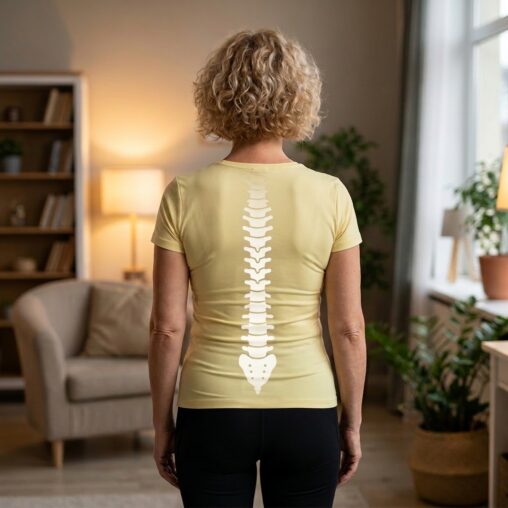 We used to think that moving the spine through every possible direction was the gold standard of core training. But modern exercise science tells us something different: your spine doesn’t need to move a lot to be healthy. In fact, for many of us, especially those with a history of back pain, the priority is often stability and control rather than maximum motion. Pilates can absolutely be a tool for that, but it works best when it teaches your body to control movement, not just create it. You can be strong and functional with a spine that moves mindfully, not dramatically.
Myth #2: “Reformers Are Harder, So They’re Better”
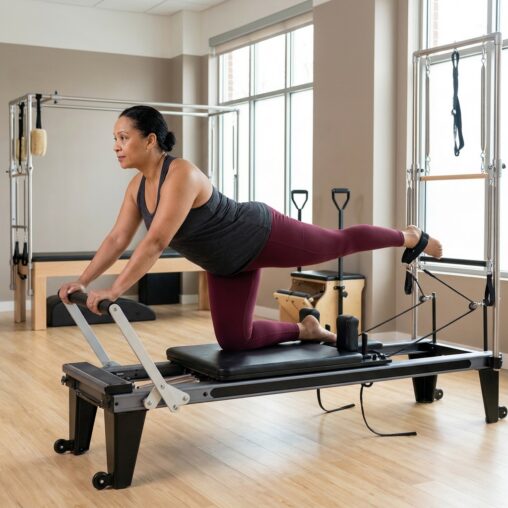 There’s a certain appeal to the Reformer; the springs, the glide, the sense of “more work.” But harder doesn’t automatically mean better. Mat work, which you can do anytime in your own home, often demands more intrinsic control from your body because you’re not being supported by external apparatus. You’re balancing your own weight, recruiting stabilizer muscles, and teaching your nervous system to stay steady. The clinical research on Pilates is actually much larger for mat-based work than for reformer-based work, which suggests that the method itself, not the equipment, is what matters most.
Myth #3: “You Need Lots of Crunches and Roll-Ups for Core Strength”
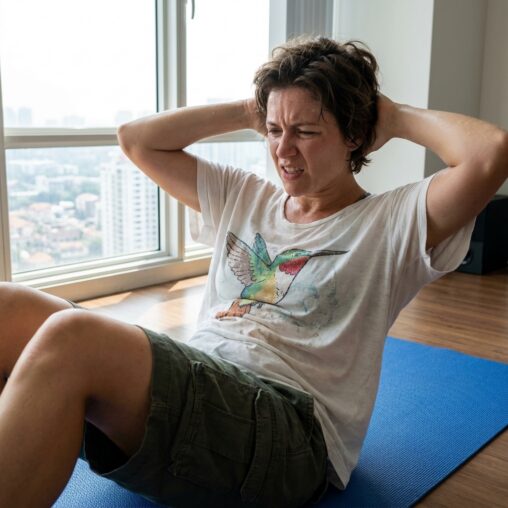 Repeated spinal flexion – crunches, roll-ups, hunching forward – is only one small part of core training, and probably not even the most important part. Modern core research shows that what we really need is anti-extension, anti-rotation, lateral stability, and trunk endurance. A balanced, multi planar core strengthens you in all directions, not just bending forward. Pilates absolutely can build this when it’s done with variety and intention.
Myth #4: “Pilates Flattens Your Stomach”
 This is the most persistent myth, and it conflates two very different things: training and body composition. Pilates absolutely improves abdominal endurance, posture, and how you carry yourself in your torso — which can change how you feel and how you look in your clothes. But visible stomach flattening depends on overall body fat, genetics, nutrition, and hydration; it’s not something one exercise system can do on its own. Pilates is a powerful tool for function and strength; it’s not a fat-loss program.
Myth #5: “Pilates Is Enough For All Your Strength Needs”
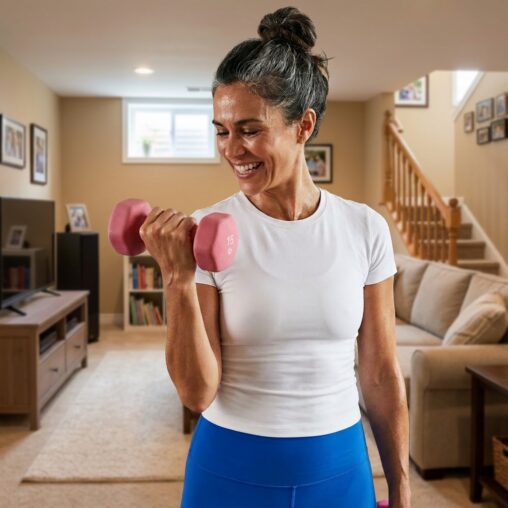 I say this with affection: Pilates is a movement practice with genuine strength benefits, but it’s not a complete replacement for progressive resistance training. Your bones, in particular, respond to heavier loading; for long-term bone health and muscle hypertrophy, you need progressive challenge that Pilates — with its bodyweight focus — doesn’t always provide. This is why I pair Pilates with classes like my BodySculpt sessions, where we use resistance to build the load tolerance your body needs as we age. Pilates is an excellent complement to strength work, not a substitute for it.
Understanding Pilates for What It Is
Pilates is a beautiful, effective method, but it works best when we update our understanding of why it works. The goal isn’t to move your spine as much as possible; it’s to move with control. The best Pilates happens on a mat, not necessarily a machine. Core strength is about balance and resilience, not endless flexion. And Pilates shines brightest when combined with other forms of training that challenge your body in different ways. If you’ve been practising Pilates for years, wonderful; keep going. If you’re new to it, I invite you to explore a class in our library or join me live. Move with intention, respect your body’s signals, and remember: a century-old method deserves modern thinking.
For More Information
- Harvard Health Publishing: “Core exercises: Why you should strengthen your core muscles”
- Mayo Clinic: “Core exercises: Why you should strengthen your core muscles”

0 Comments