

You’ve been showing up to your classes consistently, moving your body the way you know works for you, and yet you might have noticed something subtle: things feel a little bit harder to maintain.
Maybe you’re not feeling quite as strong as you used to, even though you’re still doing the work. Or perhaps you’ve noticed that staying in good shape requires a bit more intention than it used to.
There’s actually something biological happening that most people never learn about. As we get older – and this process actually starts much earlier than most of us realize – our muscles gradually become less responsive to protein. It’s not about you or your effort; it’s a natural shift in how your body processes the fuel you’re giving it.
Understanding this one thing can genuinely change how you think about staying strong and capable as the years go on.
What Anabolic Resistance Really Is (And When It Starts)
Here’s what’s happening at the cellular level: our muscles have receptor sites that respond to protein. When we were younger, a modest amount of protein would reliably help our muscles stay strong and responsive. Our muscles were, in effect, “listening intently.”
 But this responsiveness doesn’t stay the same forever. Research shows that the shift actually begins around our 40th birthday. This might explain why some of us remember that at 35, we could maintain muscle more easily than we can now. As we get older, those muscle receptors become gradually less sensitive.
Think of it like the volume on a speaker slowly turning down. The same protein signal that used to work efficiently now needs to be louder – more concentrated in a single meal – to get your muscles to actually respond. By the time we reach our 50s and beyond, this change is well established.
This isn’t a failure on your part. It’s a natural biological shift that happens to all of us.
The result? You can eat the way you always have, but your muscles won’t maintain themselves quite as readily. This is especially important for staying strong for everyday life, or maintaining the bone density and muscle mass that keep you able to live independently.
You Might Not Notice It Happening – At First
What makes anabolic resistance tricky is that it doesn’t announce itself. You don’t wake up one day with a sudden change. Instead, you might gradually notice that:
- You’re doing your regular classes but recovering from them takes longer; you need more rest days than you used to
- Your muscles feel fatigued for longer after a workout, even though the workout itself feels the same
- Maintaining strength feels like it takes more deliberate effort than it used to
- Daily activities like lifting groceries, gardening or playing with grandchildren, feel more challenging than they did five or ten years ago
- You’re consistent with your routine, but you’re not feeling quite as strong as you did in your 30s or early 40s
- You’ve noticed gradual weight gain despite not actually eating more; your body composition is shifting even when your habits haven’t changed
 That last one – the weight gain without dietary changes – is particularly telling. When your muscles aren’t recovering and rebuilding as efficiently, you’re gradually losing muscle mass while maintaining or gaining fat. Since muscle burns more calories at rest than fat does, your metabolism subtly shifts downward. Many active people dismiss this as just “getting older” or blame themselves for not being as disciplined, but the truth is often more specific. Your muscles haven’t stopped responding; they’ve just changed what they need to respond effectively. And if you’re in your 40s noticing this shift, you’re right on time; this is exactly when your body begins signalling that it needs a different nutritional approach.
The Fix Isn’t Eating More Protein. It’s When You Eat It
Let’s get practical. You don’t necessarily need to overhaul your diet or eat significantly more protein every day. Instead, it’s about when you eat it and how much you consume in a single sitting.
 The key player here is something called leucine, which is a specific amino acid found in protein. Think of leucine as the “trigger” that tells your muscles it’s time to maintain and rebuild themselves. As we age, our muscles need more of this trigger in a single meal to actually respond. People over 50 need about 3 grams of leucine per meal to send that signal effectively. And the shift toward needing this higher amount has likely been building since your 40s.
The good news? Spreading your protein across several meals throughout the day, rather than loading it all up at dinner, means your muscles get that signal consistently. Aiming for about 25 to 30 grams of protein at breakfast, lunch, and dinner gives your muscles what they need to stay capable and strong, rather than getting starved all day and then overwhelmed at the end.
If you’re doing a BodySculpt class or other strength training, make sure your next meal or snack is protein-rich so your muscles have the building blocks they need to grow and repair. It’s less about dramatic results and more about efficient maintenance.
The Protein Sources That Work
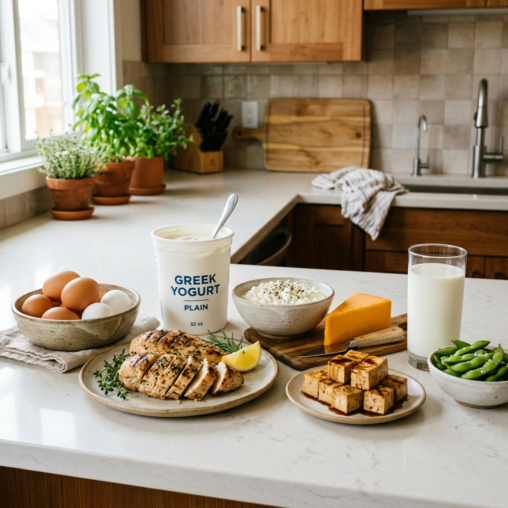
 The easiest way to hit that 3-gram leucine threshold per meal is to include one solid serving of protein: an egg-based breakfast, a palm-sized portion of chicken or fish, a generous bowl of Greek yogurt, or cottage cheese. Tempeh, edamame, and hard cheeses like Parmesan all work beautifully too.
The beauty of whole foods is that they’re accessible, satisfying, and they come packaged with other nutrients your body needs.
Staying Strong as You Age
Anabolic resistance is one of those things that doesn’t get talked about much, even though it’s a universal biological shift that happens to everyone. It’s not a sign that you’re doing anything wrong; it’s a signal that your body has changed and needs a slightly different approach to nutrition.
The encouraging part? Once you understand what’s happening, you can work with your biology instead of wondering why staying strong requires more intention than it used to.
Consistency in your classes combined with a smarter protein strategy isn’t about chasing goals; it’s about honouring the body you have and keeping it capable for the life you want to live.
Whether you’re in your 40s and just beginning to notice the shift, or into your 50s and 60s, adjusting your protein approach now makes a real difference.

This isn’t a suggestion but just a comment on how I was feeling more lately. I was more tired in the afternoon and couldn’t figure out why I was gaining weight in my middle section in the last few years when my diet hasn’t changed. As I was reading your post, I thought BINGO, that’s exactly what’s happening to my body. I must be careful to add more protein at every meal. Thank you for shedding light on this!
The only suggestion I have for morning protein to make it easier when you’re in a rush, is to make eggs with veggies in a muffin pan for grab and go.
Hi Christine. Thanks for the interesting read. I have definitely noticed a slow down in my metabolism and muscle mass. I will be 64 in mid October and only see minor changes in my weight and muscle mass even though I am golfing twice a week and doing body sculpt and yoga classes 2-3 times per week. I am eating healthy with more protein. My kids say I should be taking Creatine to help build muscle. What do you think?