

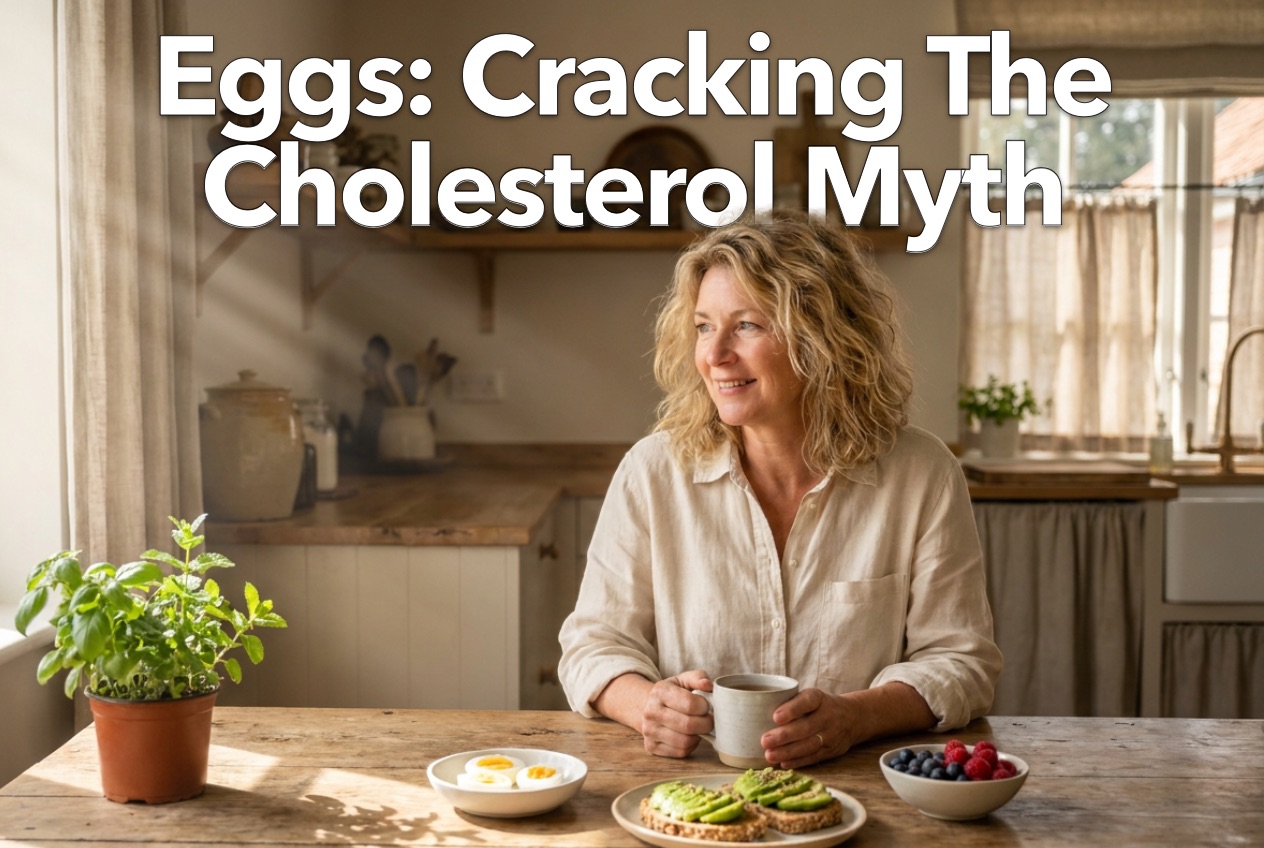
One of the questions I’m often asked when I wear my “nutrition counsellor” hat is: how many eggs are safe to eat in a day?
And I get it. I’m old enough to remember when eggs were on the naughty list – regarded as risky, something you had to justify eating if you cared about your health.
But like so much of science, what seemed settled at the time turns out to have been based on incomplete understanding. And as our knowledge evolves, sometimes we have to let old ideas go.
Charles and I eat a hard-boiled egg for breakfast most days, because the science has finally caught up with what makes sense; there’s nothing inherently risky about them at all.
The Myth That Stuck Around (But Shouldn’t Have)
 Back in the 1960s and 70s, researchers noticed a link between saturated fat and rising heart disease rates. Because egg yolks are high in cholesterol, they got lumped into the “bad foods” category right alongside bacon and butter. For nearly 50 years, dietary guidelines told us to limit cholesterol to 300 mg per day – roughly the amount in one and a half egg yolks. The advice was well-intentioned, but it was based on an incomplete understanding of how our bodies actually work.
Here’s the thing about nutrition science; it’s supposed to evolve. Remember when coffee was going to kill us? Then it was good for us? Then bad again? Then good again? That’s how science works: we gather better data, run better studies, and sometimes our conclusions change. It’s not a sign that experts were lying to us; it’s a sign that we’re learning.
Finding The Real Culprit
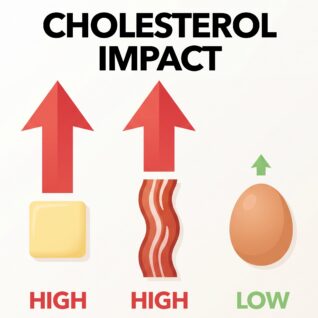 Fast forward to 2015. The US Dietary Guidelines finally dropped the 300 mg cholesterol limit. Why? Because large, well-designed studies involving millions of people found only a weak link between egg intake and heart disease. More importantly, researchers discovered something crucial; saturated fat has a much stronger effect on blood cholesterol levels than dietary cholesterol does.
Interestingly, Canada never actually set a specific limit on dietary cholesterol. Health Canada focused on reducing saturated fat instead – the right approach all along. But because so much health information flows from the United States, the American myth about eggs and cholesterol held sway on both sides of the border.
A landmark 2025 study published in the American Journal of Clinical Nutrition put this to the test directly. Researchers had one group eat two eggs daily as part of a low-saturated fat diet. Another group ate high-saturated fat foods without eggs. The result? The group eating eggs actually had lower LDL (the “bad” cholesterol) levels than the high-saturated fat group. When you look at what actually raises blood cholesterol, it’s the butter you cook the eggs in, not the eggs themselves.
Genes Play a Bigger Role Than You Think
 Here’s another layer that often gets overlooked: genetics. Your genes control about 60 to 80 percent of your blood cholesterol levels. Diet influences the remaining 20 to 40 percent. So even if you do eat eggs regularly, your individual response depends largely on your genetic makeup. Some people’s bodies tightly regulate cholesterol, regardless of intake. Others are more sensitive. This is exactly why one-size-fits-all dietary rules so often fail us.
So How Many Eggs Are Actually Safe?
 Here’s where Canada’s forward-thinking approach to cholesterol really shines. Canadian health organizations such as the Canadian Cardiovascular Society, the Heart and Stroke Foundation and Diabetes Canada do not recommend that healthy adults limit egg consumption. In other words; no specific limit. That’s refreshingly straightforward.
For those who want a more general benchmark, the American Heart Association suggests up to one egg per day for most healthy adults, and up to two eggs daily for healthy older adults. But the Canadian position is essentially; if you’re healthy, eat eggs without worry. The context matters far more than the number; eggs with whole-grain toast, avocado, and vegetables is a balanced meal that supports your health. Eggs fried in butter and served with bacon tells a very different story.
Trust the Process, Question the Source
 What I love about this shift in egg science is what it teaches us about information literacy. We live in a world where you can find “proof” for almost anything online. The difference is where that information comes from. Before you accept a nutrition claim, whether it’s about eggs, coffee, or anything else, ask yourself: Is this from a credible, authoritative source? Has it been peer-reviewed by other scientists? Or is someone trying to sell me something?
The guidelines changed on eggs because the data changed, not because anyone was covering anything up. That’s how good science works. And it’s worth remembering the next time you see an alarming health claim on social media.
Your Body Is Your Best Teacher
 The beauty of fitness is that it teaches you to listen to your own body’s signals. When you move consistently, you learn what makes you feel strong and what doesn’t.
Nutrition works the same way. If eggs make you feel good, fuel your workouts, and fit into your overall dietary pattern, then they’re a sensible choice for you.
The old fears about eggs were well-meaning but ultimately didn’t match the science. Now that we know better, we can enjoy them for the delicious, convenient food they really are.
The Bottom Line
Science changes when we have better evidence. That’s not a weakness; that’s how progress works.
Eggs have been unfairly maligned for decades, but current research shows they’re a nutritious, heart-healthy choice when eaten as part of a balanced, low-saturated fat diet. The cholesterol in eggs isn’t the issue; saturated fat is.
So go ahead and enjoy eggs without anxiety. Trust the current science, stay curious about how nutrition research evolves, and remember to question the source of the claims you encounter.
For More Information:
American Heart Association. “Here’s the Latest on Dietary Cholesterol and How It Fits in with a Healthy Diet.” Link
Carter, S., Hill, A. M., Yandell, C., Wood, L., Coates, A. M., & Buckley, J. D. “Impact of dietary cholesterol from eggs and saturated fat on LDL cholesterol levels: A randomized cross-over study.” The American Journal of Clinical Nutrition, 2025, 122(1), 83–91. Link
Cleveland Clinic Heart & Vascular Institute. “Eggs and Cholesterol (August 2026): What the Science Really Says?” Link
Mayo Clinic. “Eggs: Are they good or bad for my cholesterol?” Link
U.S. Department of Health and Human Services. “Scientific Report of the 2025 Dietary Guidelines Advisory Committee.” Link
Victor Chang Cardiac Research Institute. “Eggs and Heart Health.” Link

0 Comments