

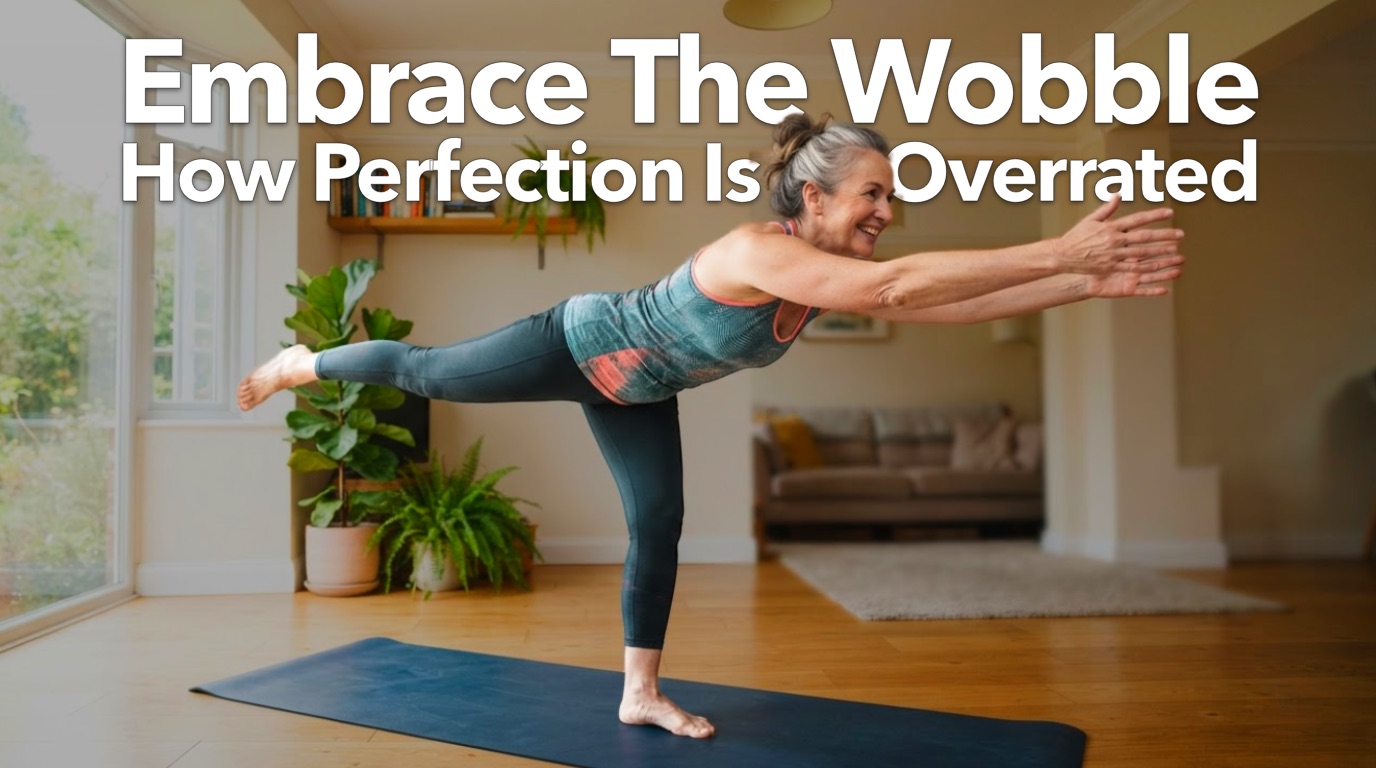
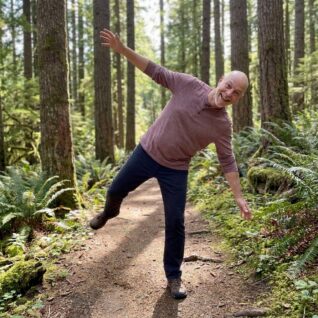
 Like a lot of people, my partner Charles struggles with balance. Exercises like Single Leg Deadlift and poses like Warrior Three have always given him trouble, and he’s the first to admit these moves are on his “least favourite” list.
But the other day in BodySculpt, something changed. Charles came to a realization, which he’s happy for me to pass along: he’s never going to achieve “perfect” balance. He wobbles. His standing leg shakes. He can’t hold a pose for more than about three seconds. And that’s fine. Because the perfect pose was never actually the point.
The point is the trying.
The Modified Move Still Counts
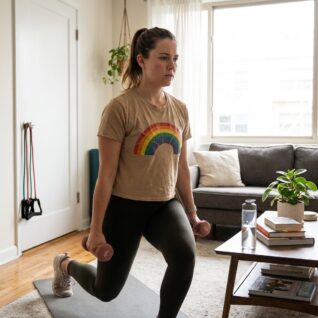
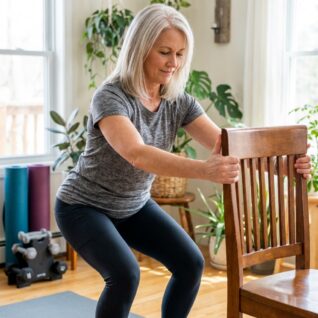 If a full squat bothers your knees, that doesn’t mean squats are off the table; it means your version needs to change. Go a quarter of the way down, or halfway – whatever you can manage in good form and with no pain. Research backs this up: the safest, most effective range of motion is the largest one you can hold with proper technique and without pain, not a fixed depth everyone’s supposed to hit.
Squatting is a basic human movement; you sit and stand dozens of times a day. A modified squat is still a squat.
Wobbling Is the Workout
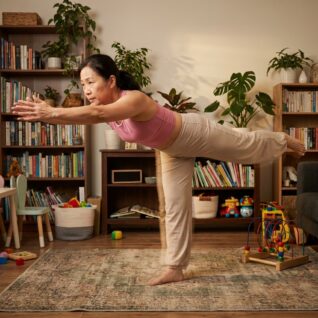 That shake in your standing leg isn’t a sign you’re doing it wrong; it’s your nervous system and stabilizer muscles actively working. Every wobble is a rep. You build balance by repeatedly asking your body to find it, not by landing a pristine, motionless hold. This is exactly what we practise in my classes, live or in the video library.
Judge the Effort, Not the Finish
 Fitness research draws a clear line between “mastery” goals – getting a little better at your own movement – and “outcome” goals – measuring yourself against an external standard. Athletes focused on personal mastery stick with activity longer and enjoy it more than those chasing a finished result. Attempting the move, with real intention, is the training effect.
Be Kind to Yourself When You’re Not Perfect
 Research on self-compassion and exercise found something encouraging: people who treat themselves gently after a setback (like a shaky pose or a modified squat) are more likely to get back up and try again than people who beat themselves up over it. Being patient with your own wobbly progress isn’t a consolation prize; it’s the thing that keeps you coming back.
Keep Trying, Not Perfecting
None of us are chasing a flawless Warrior Three or a textbook squat around here; we’re chasing the practice of showing up and moving, in whatever version our body allows today. Modify what needs modifying, let the wobble be information instead of failure, and measure progress by effort, not outcome. That mindset will carry you further than any perfect pose ever could.
For More Information
- Frontiers in Sports and Active Living, “Impact of the deep squat on articular knee joint structures, friend or enemy? A scoping review” (2024): Link
- PMC, “Lower Extremity Strength and the Range of Motion in Relation to Squat Depth” (2015): Link
- ScienceDirect, “The roles of self-compassion, body surveillance, and body appreciation in predicting intrinsic motivation for physical activity… within a yoga context”: Link
- PMC, “Achievement Goals and their Underlying Goal Motivation: Does it Matter Why Sport Participants Pursue their Goals?”: Link

0 Comments